Rae
My Role: Founding Designer (UX, UI, Research, Branding)
Rae provides mental health support for anyone who needs it 24/7. Leveraging AI, Rae offers structured sessions, actionable insights, informal chats and progress tracking. Rae has conducted 5,000+ sessions with an average rating of 4.5 out of 5 stars.
Website: rae.chat
Overview
Many people don't get the mental health care they want due to high cost, lack of access, lack of time, cultural stigma among other factors. Rae aims to provide mental health support for anyone who wants it.
Problem Description
They say design isn't a linear process. I experienced this first-hand with Rae. The founder and I wanted to launch an MVP as quickly as possible to test market reception. After MVP launch, I continuously redesigned to improve user experience, strengthen stickiness, and increase engagement.
Building the MVP
Post MVP Redesigns
The product got users! Within 2 weeks post-launch, Rae had 240 sign ups, completed 318 sessions and received an average rating of 4.5 out of 5. This encouraged us to continue working on Rae.
New problem statement: how do we grow the user base and increase engagement?
We divided the question into 3 sub questions.
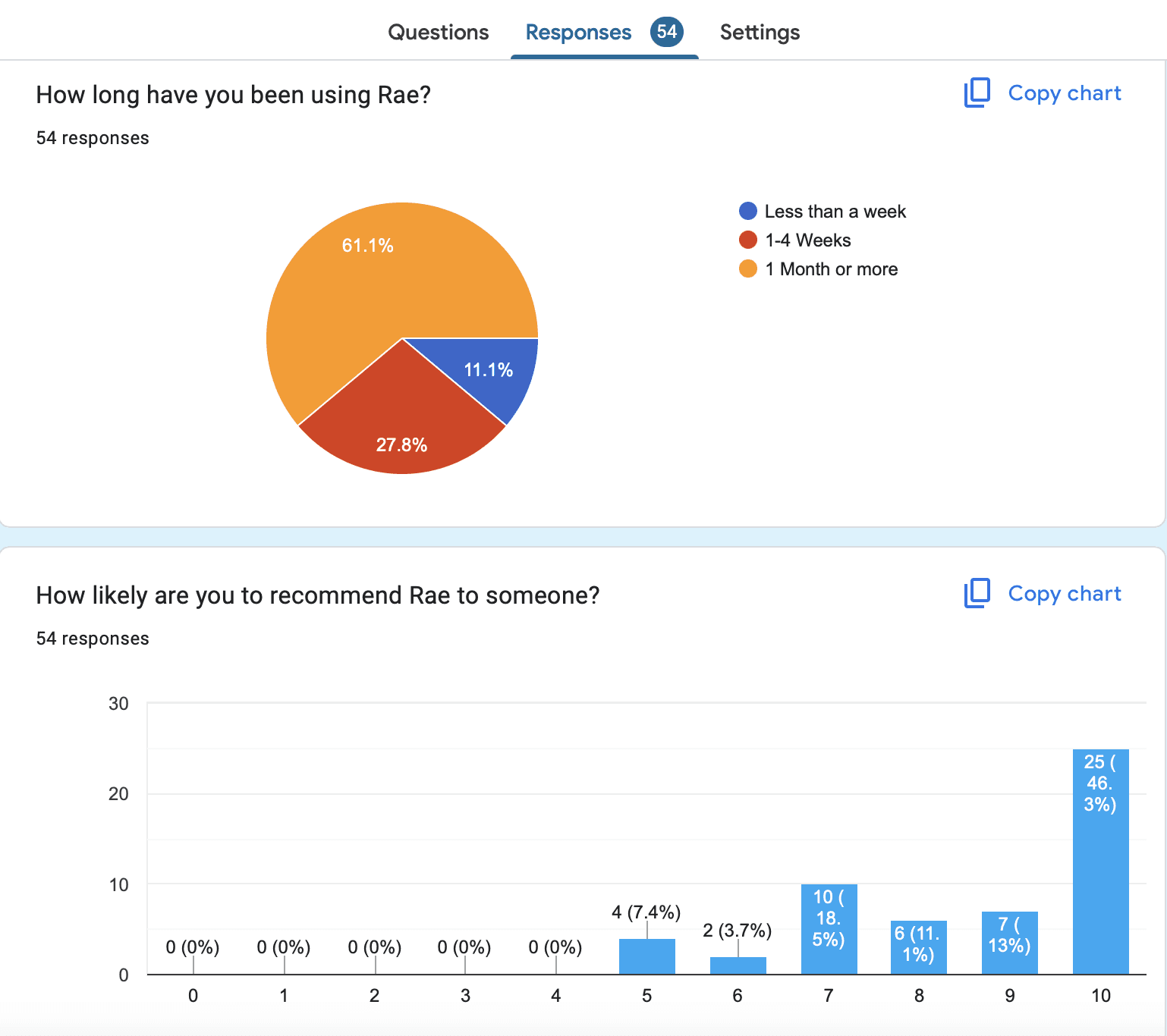
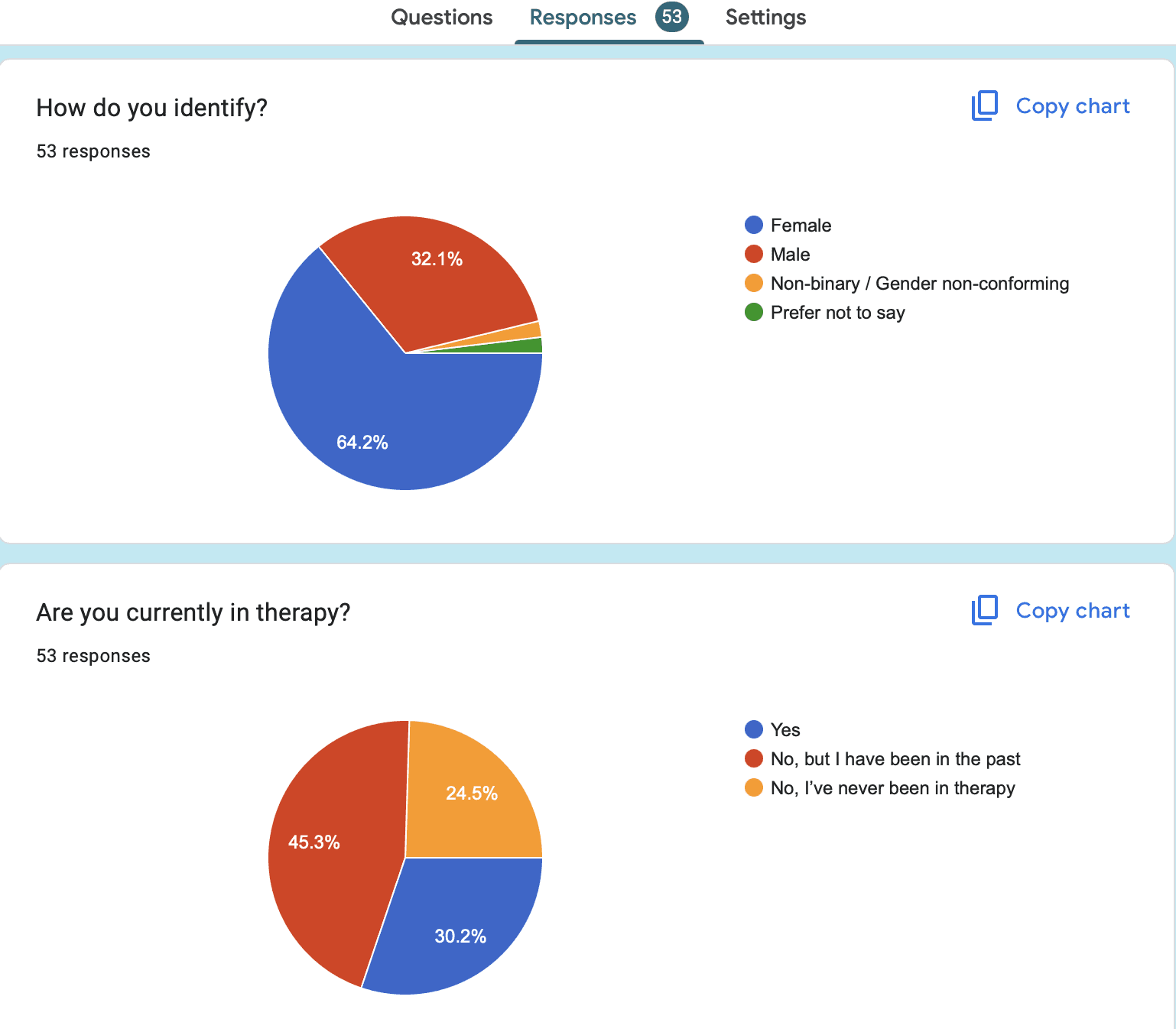
Given the quick timeline for launching the MVP, I conducted secondary research and primary research from online forum discussions (e.g., Reddit). Below are the key findings that helped determine the UX, UI and branding for the MVP.
Reasons why some people appreciate AI therapy over traditional therapy:
No judgement
Always available
Available around the world, even in places where therapy isn't prevalent
Can keep users accountable
"Humans are quick to judge while I find AI therapy has a soft tone and says everything to help me keep going"
"ChatGPT has talked me through my intrusive thoughts and I’ve felt better than I have in a long time. Plus, I don’t have to wait a whole week for a 45 minute session that costs money"
Have a 24/7 casual chat option
Provide options in different languages
Make memory applicable throughout sessions
Have key insights
Have actional next steps
Be as empathetic, understanding as possible
Demographically, the majority of therapists (~75%) are female. Women are almost twice as likely as men to get therapy.
The branding and UI could lean more feminine
Shortcomings of AI therapy
Responses can feel unnatural
No true human sympathy
"They're so artificially eager to please and doesn't question or challenge"
"There are times when it would ask questions in circles"
Responses should be as natural and empathetic as possible
Add a voice option that sounds natural
Initial Discovery
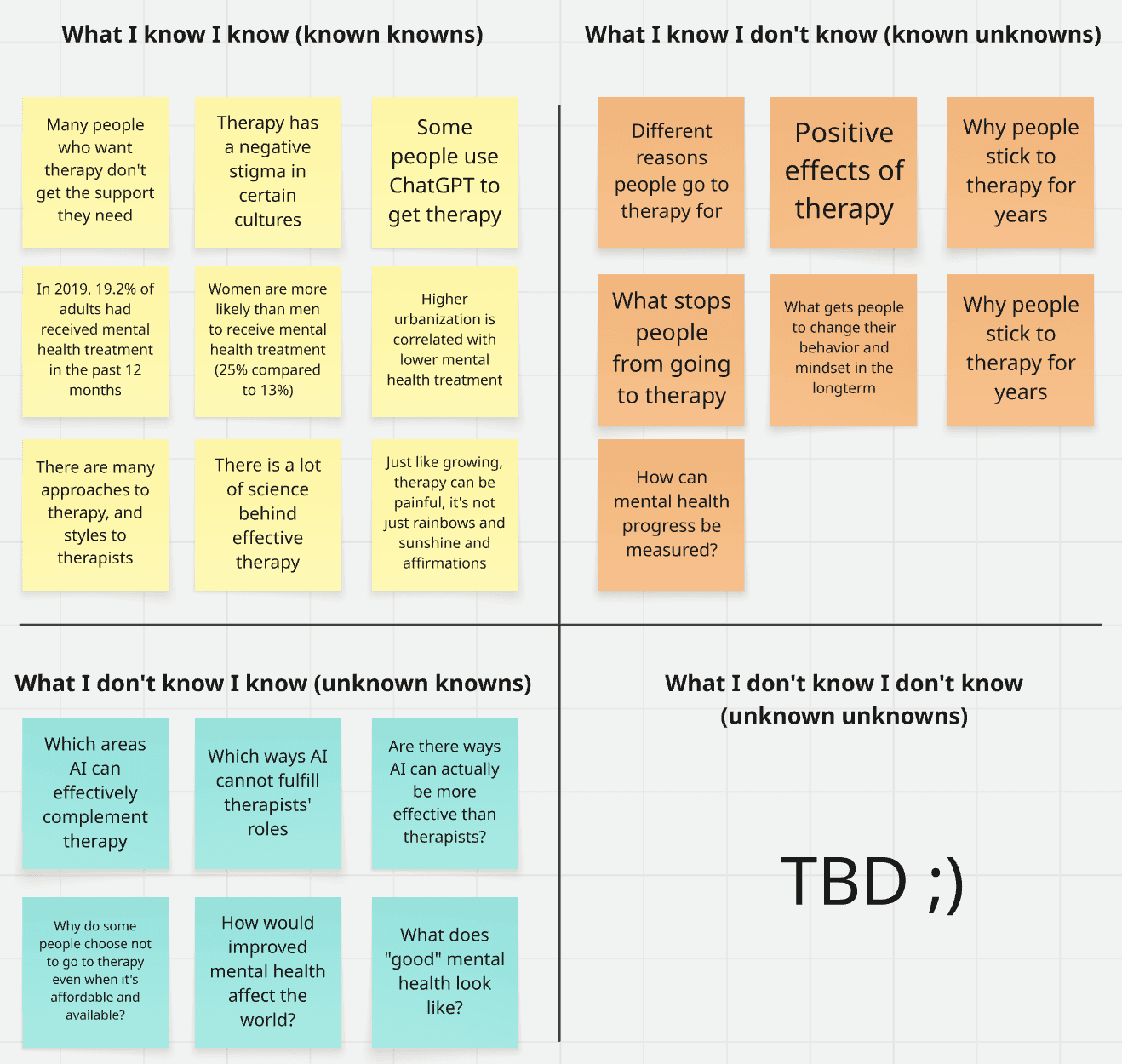
Key Findings
Implications
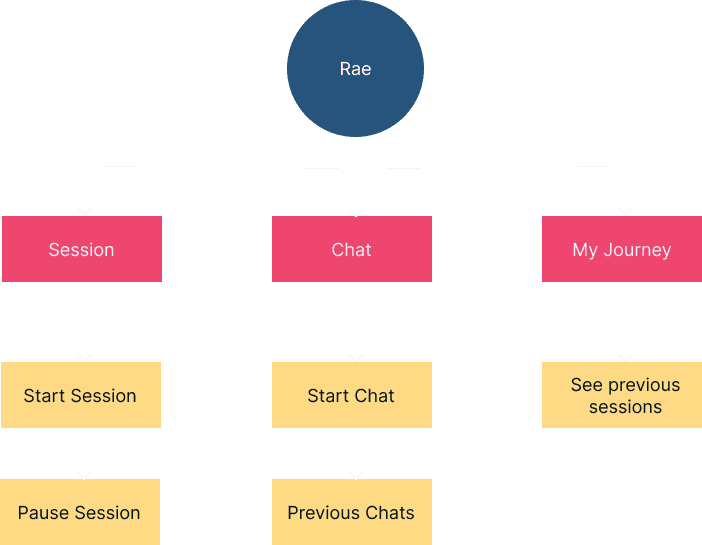
The IA for the MVP is simple with 3 main parts
Sessions mimic traditional therapy sessions with actionable insights
Chat gives 24/7 support
My Journey tracks the user's mental health journey with Rae
Preliminary Information Architecture
Branding and UI
Imagery
The icons are inspired by nature, suggesting the organic journey of growth.
Section
Icon
Description
My Journey
The user's personal journey is represented by a seedling. Similar to how a seedling grows under the right amount of water, light and nutrients, one's mental health can also evolve with care
Sessions are represented by a lotus flower to convey calmness, resilience and inner strength
Session
Chat is represented by a leaf. Chats are more simple and free flowing, just like how leaves blow in the wind.
Chat
Settings is a flower version of the traditional settings icon
Settings
Feedback is a water droplet because water nourishes the plant’s growth
Feedback
The overall feeling should be friendly, inviting and warm, so users enjoy talking to Rae. The experience should also feel calm, accepting and trustworthy, so users feel comfortable sharing personal emotions and experiences.
Naming
To make the sessions feel more personal, I wanted to choose a name that sounds like a person's name. The name should be short, 1 or 2 syllables, to keep the focus on the user. The name should be gender neutral to encourage inclusivity.
Short list
Niki
Raven
Rave
Rae
Raine
Rae was chosen because it is simple and is a homophone for ray, as in a ray of sunlight for a symbolism of hope.
Logo
The initial logo was inspired by the 7 chakras. It's a belief system that by balancing the 7 chakras, one could achieve a more fulfilling emotional life
Trial logos
Logo for the MVP
This was chosen for its hypnotic and calming qualities. The rings gradually decrease in width and become lighter as they go outwards.
Colors
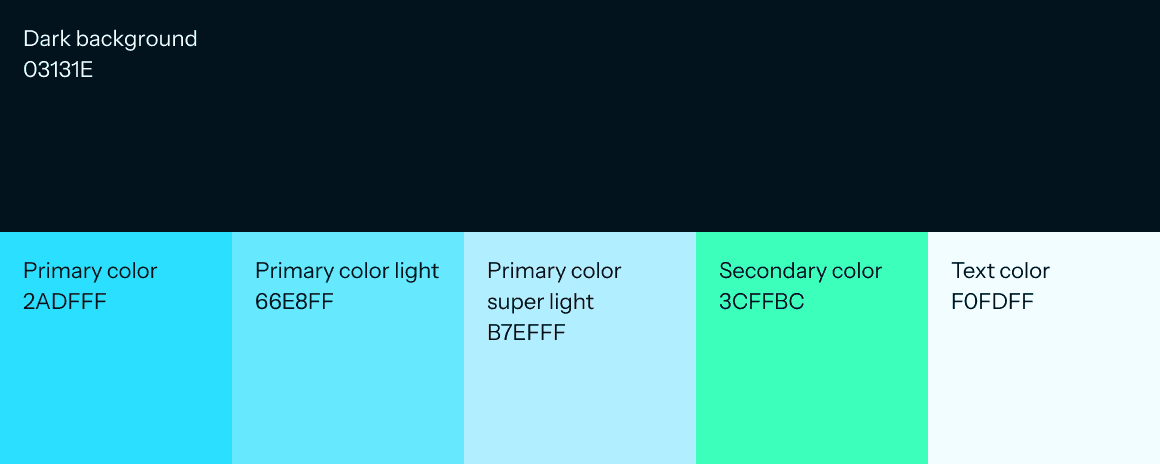
The primary color is a soft blue to convey calmness. Various shades are used in the logo to add dimension as if water is rippling. The secondary color is a green, mostly used to congratulate users when they finish a session or milestone. Gradients are used to represent softness in approaching something as sensitive as mental health.
How can AI serve an unfulfilled need in mental health?
How can Rae develop a connection with users so they return week after week, even multiple times per week?
How can we distinguish Rae from other AI therapy platforms, so users choose Rae over other platforms?
AI can serve several key unfulfilled needs in mental health
24/7 support
No judgement
Memory of conversations
Lower cost compared to traditional therapy
No need to do logistical steps like scheduling and calling insurance
Don't need to spend time finding a therapist
How can Rae build connection with users?
Be reliable when someone needs help
Feel like a genuine friend by having a compassionate tone and remembering previous conversations
Relate previous chats with the current conversation
Be able to track progress
How can we distinguish Rae from other AI therapy platforms, so users choose Rae over other platforms?
Leverage memory so that the more the user talks to Rae, the deeper and more meaningful the conversations get
Personalized and actionable takeaways after each session
Distinct branding, UI and tone that portray calmness compared to competitors that have other vibes (e.g., Calmi uses Gen Z language)
Complaints, constraints suggestions
Sometimes Rae is too positive and it feels fake
Answers sometimes feel formulaic, ending in a question everytime
Being able to voice talk with Rae would make it feel more natural
Can't deal with crisis situations and some specialized disorders
Too much text at once can be hard to digest
We tackled these questions through 13 user interviews, 4 rounds of surveys (140 responses total), competitive analysis and expert interviews. We recruited an advisor who is a practicing psychotherapist and professor.
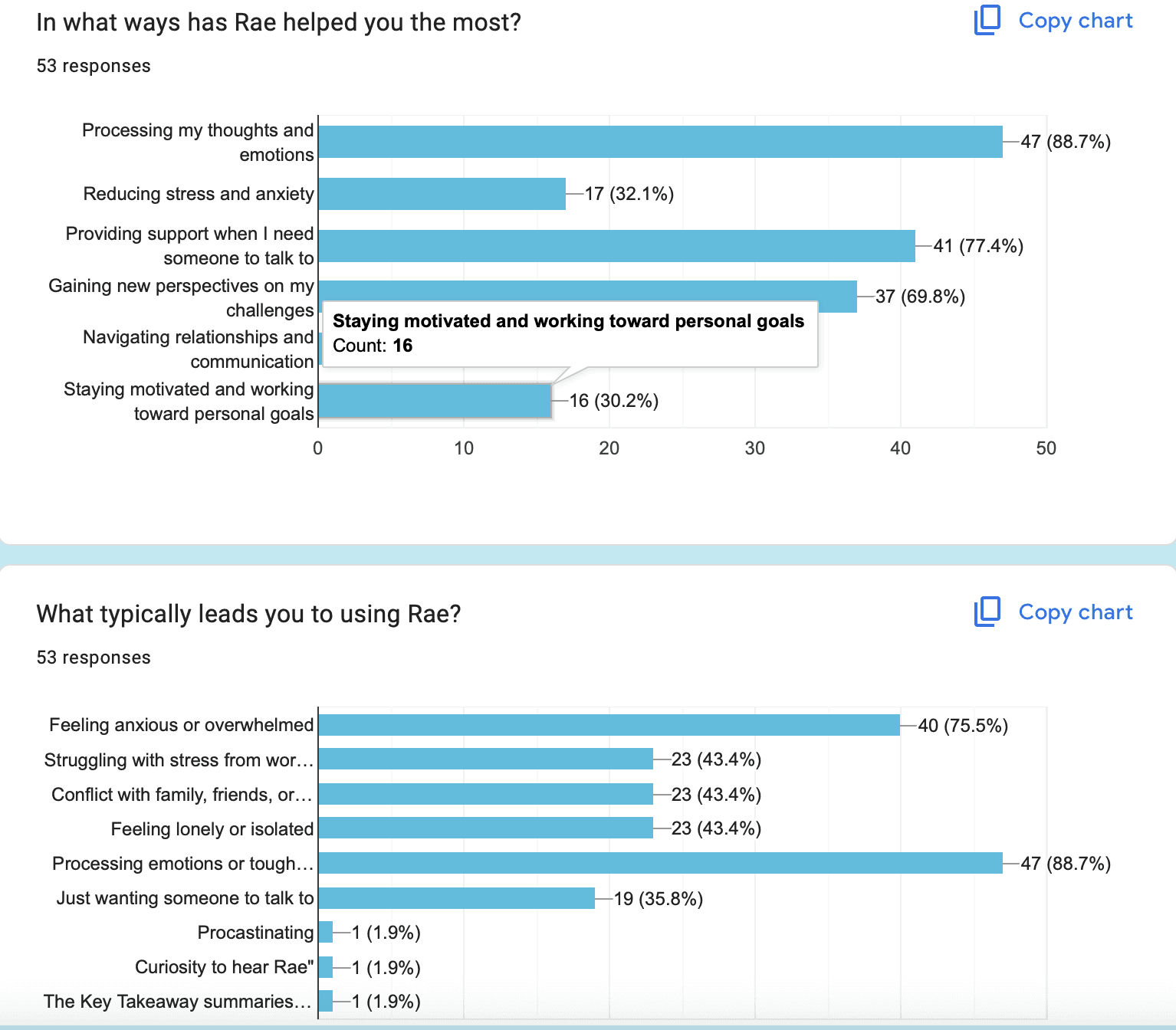
I made an affinity map based on the user interviews, syntheisizing key takeaways to incorporate into redesigns.
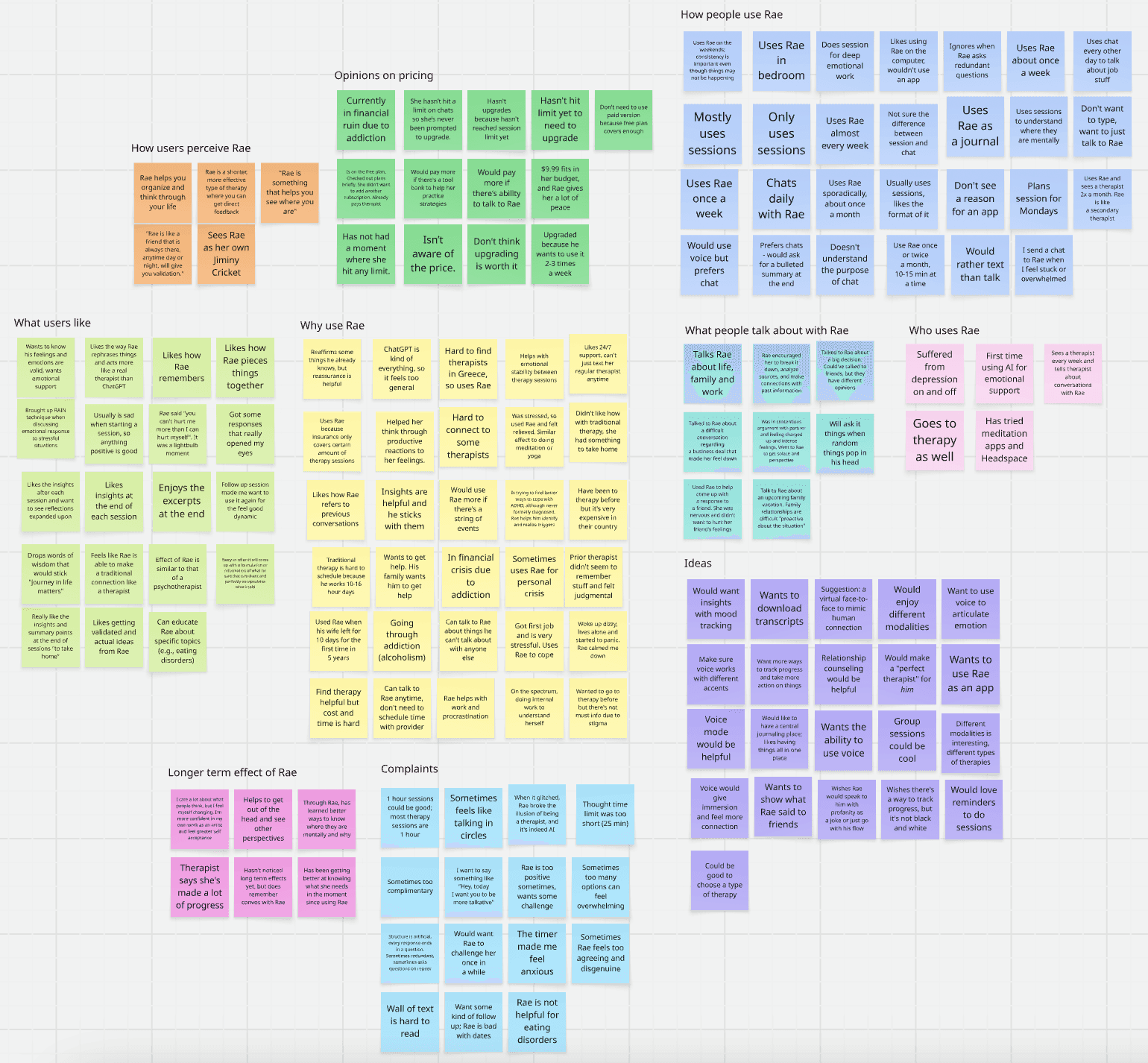
Key Research Findings
Smoother, shorter onboarding process to decrease dropoff
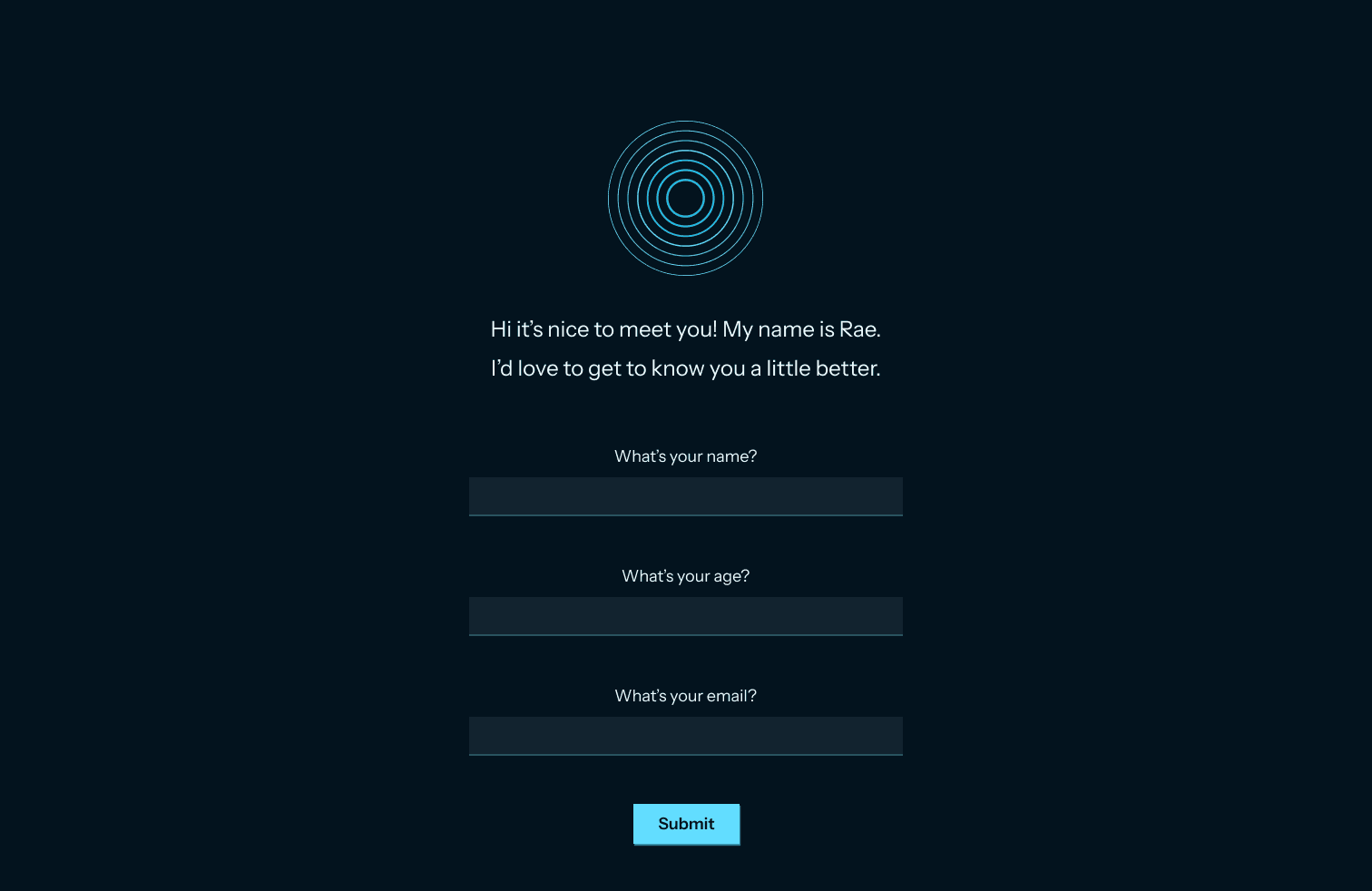
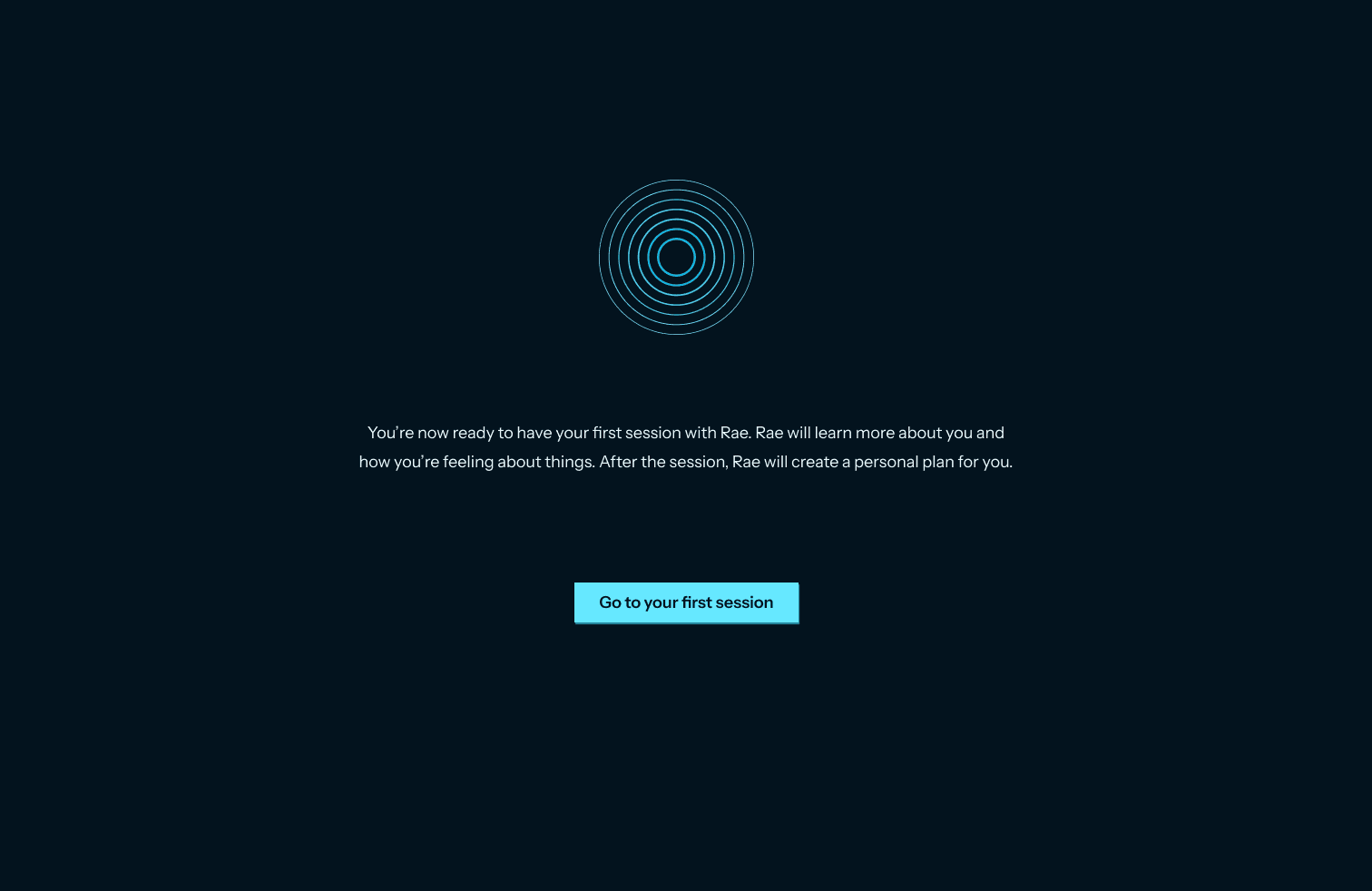
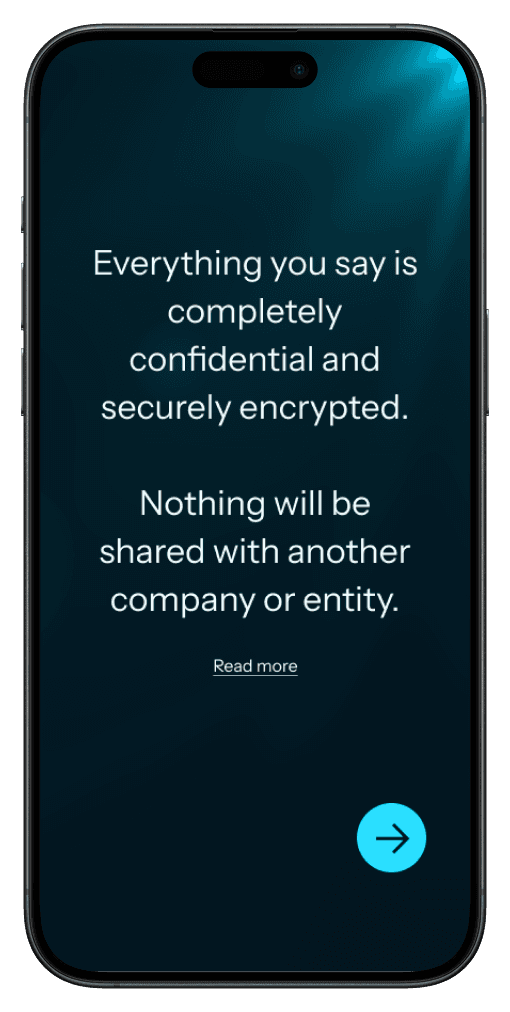
One advantage of AI therapy is that it has a lower barrier to entry. Users don't need to search for therapists on the Internet, research their reviews and specializations, schedule an appointment, and build rapport. In the MVP for Rae, onboarding took on average of 15 minutes to complete. I redesigned it to take less than 5 minutes, making it as frictionless as possible while building excitement and trust. I also made sure to gather important information about the user (e.g., age, location reasons for wanting to get therapy) and transparently communicate the limitations of AI therapy. For the visual experience, I leaned into Rae being a ray of light that symbolizes hope.
Major Redesigns After MPV Launch
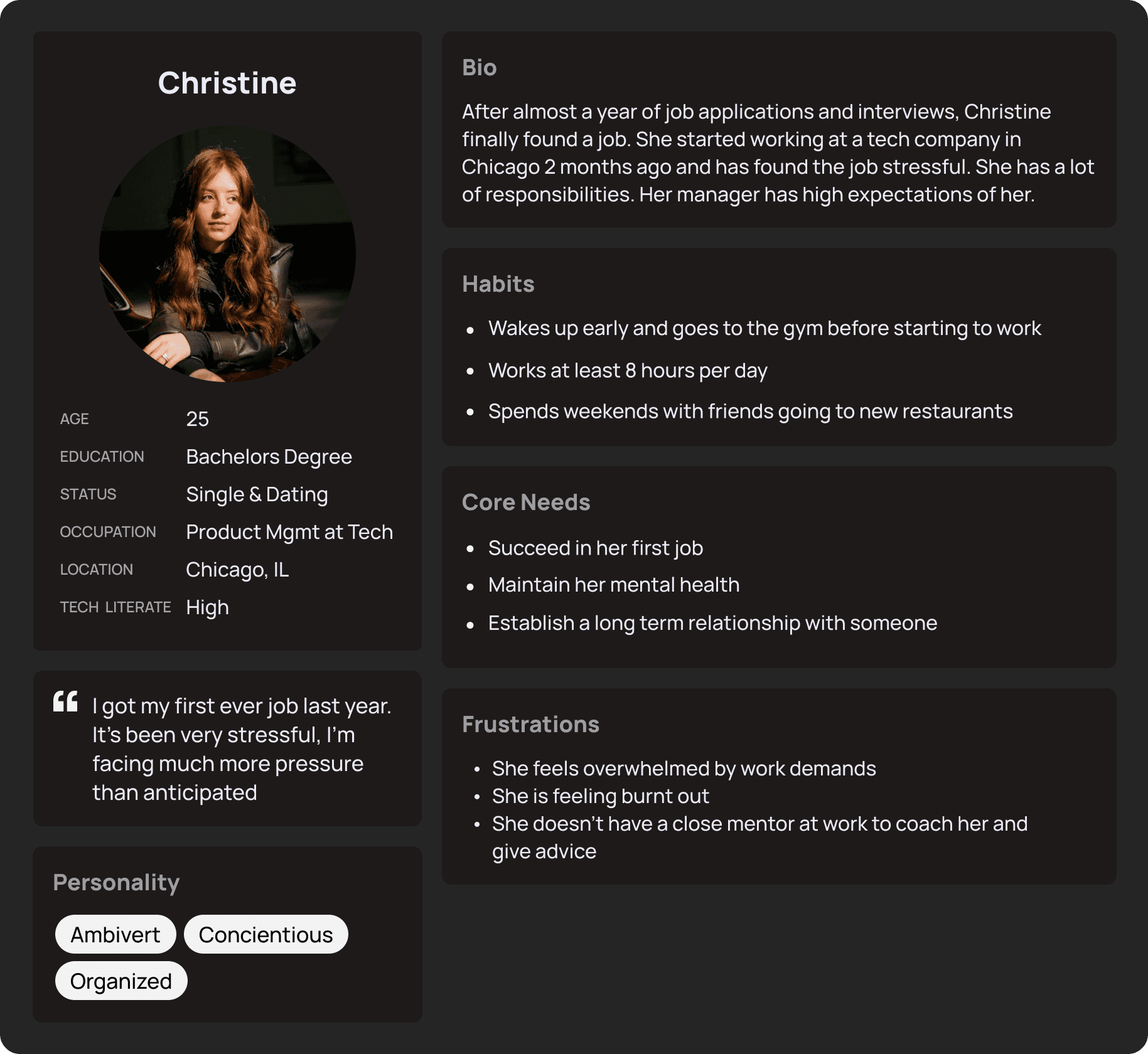
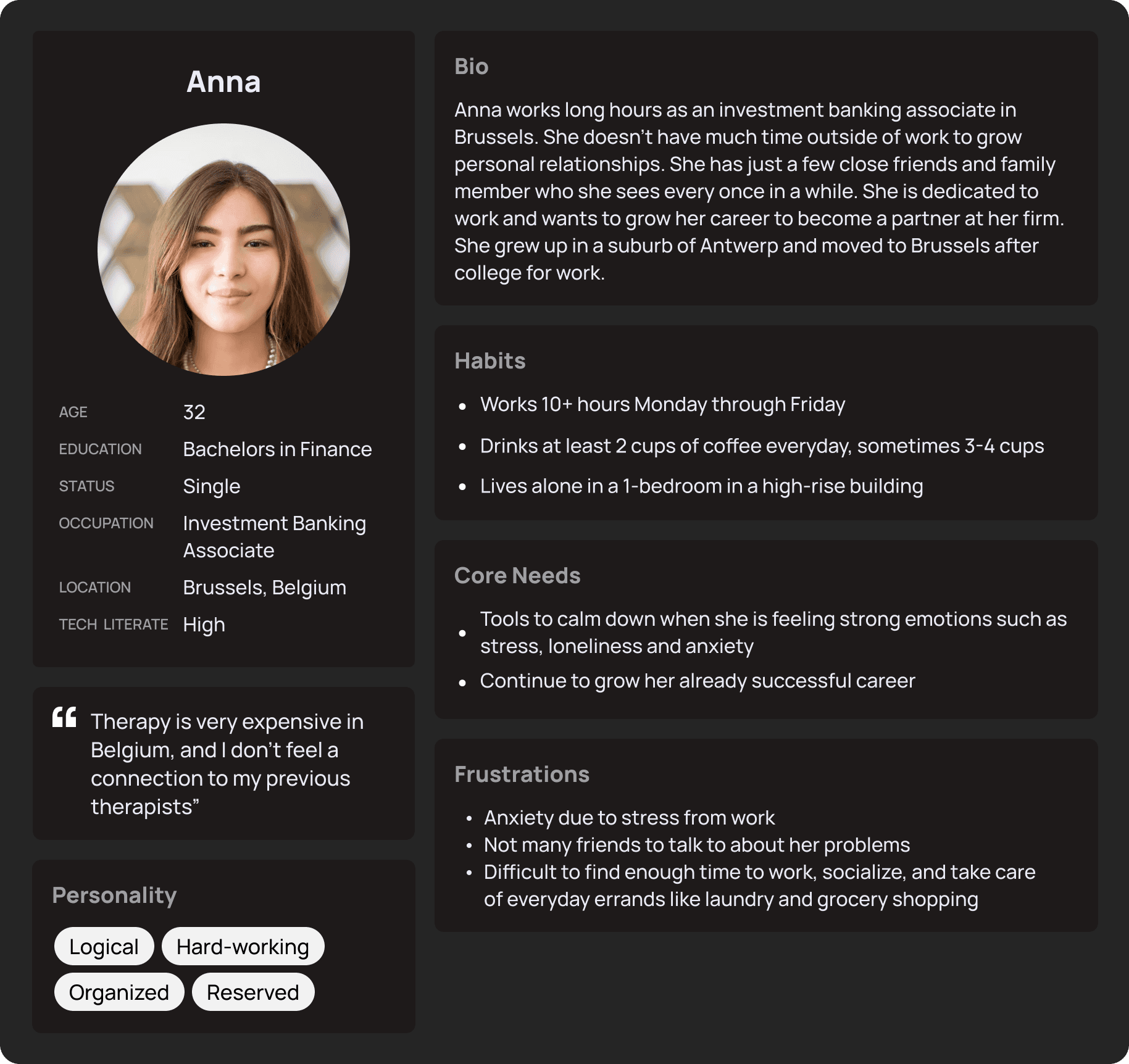
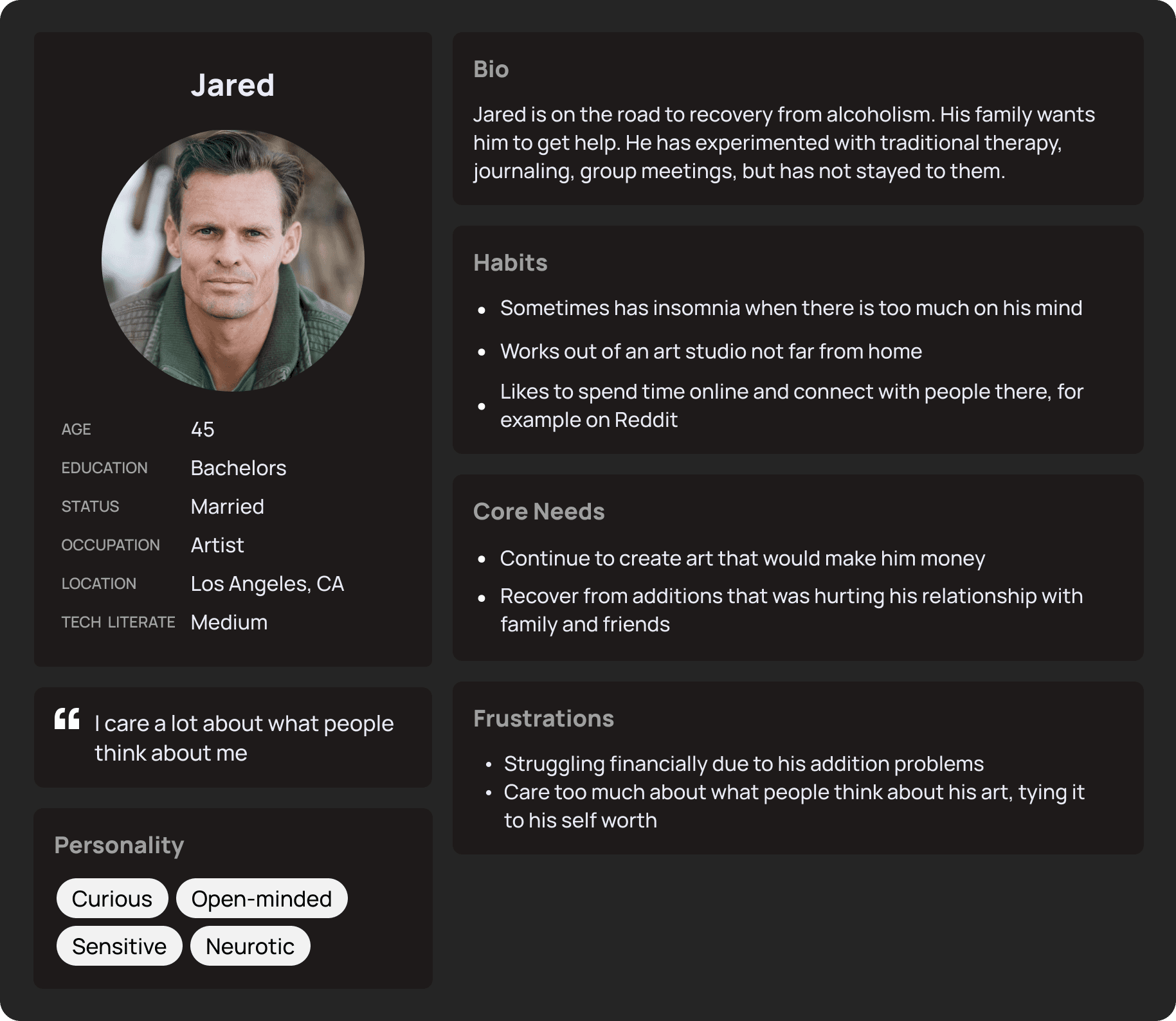
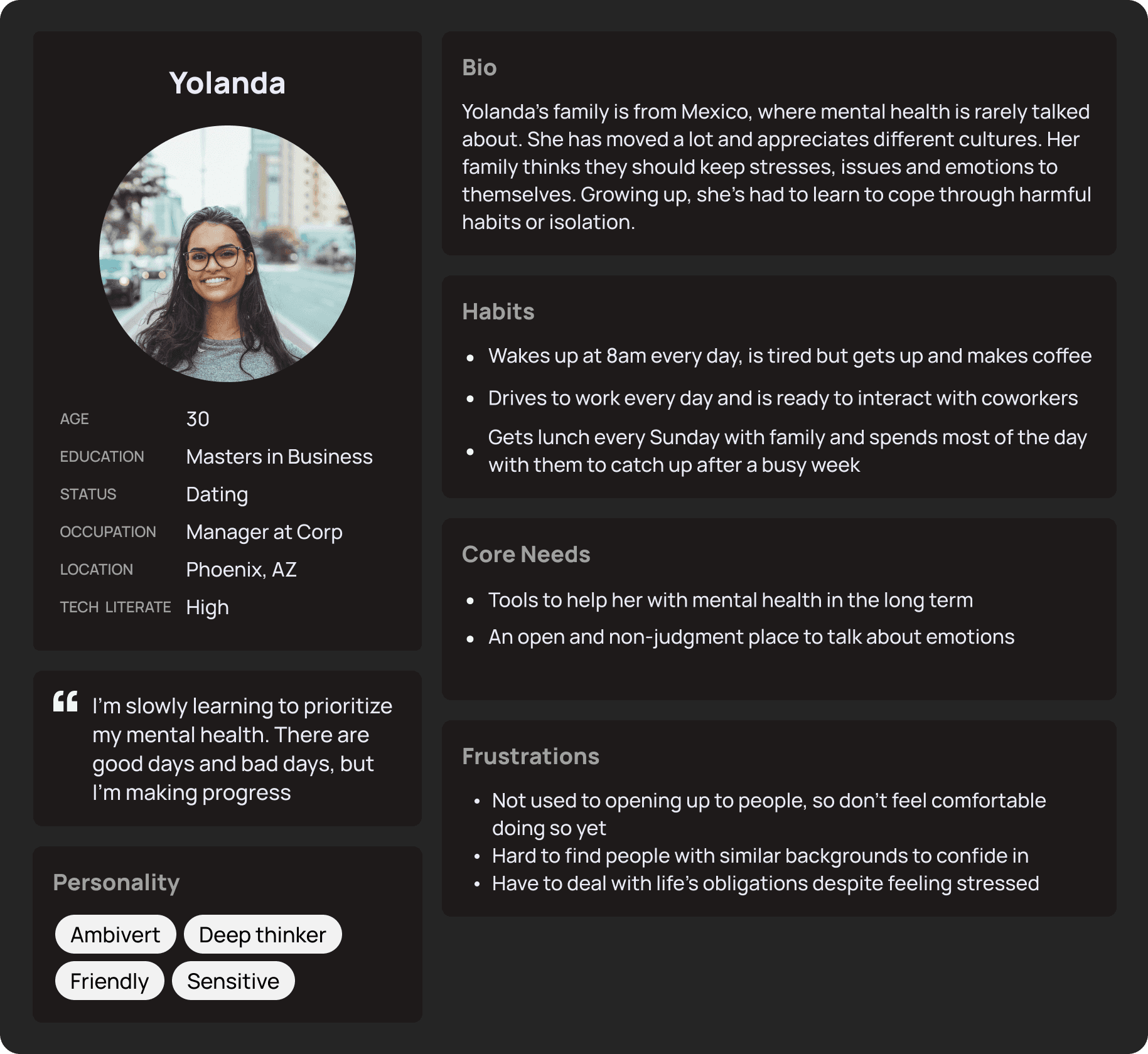
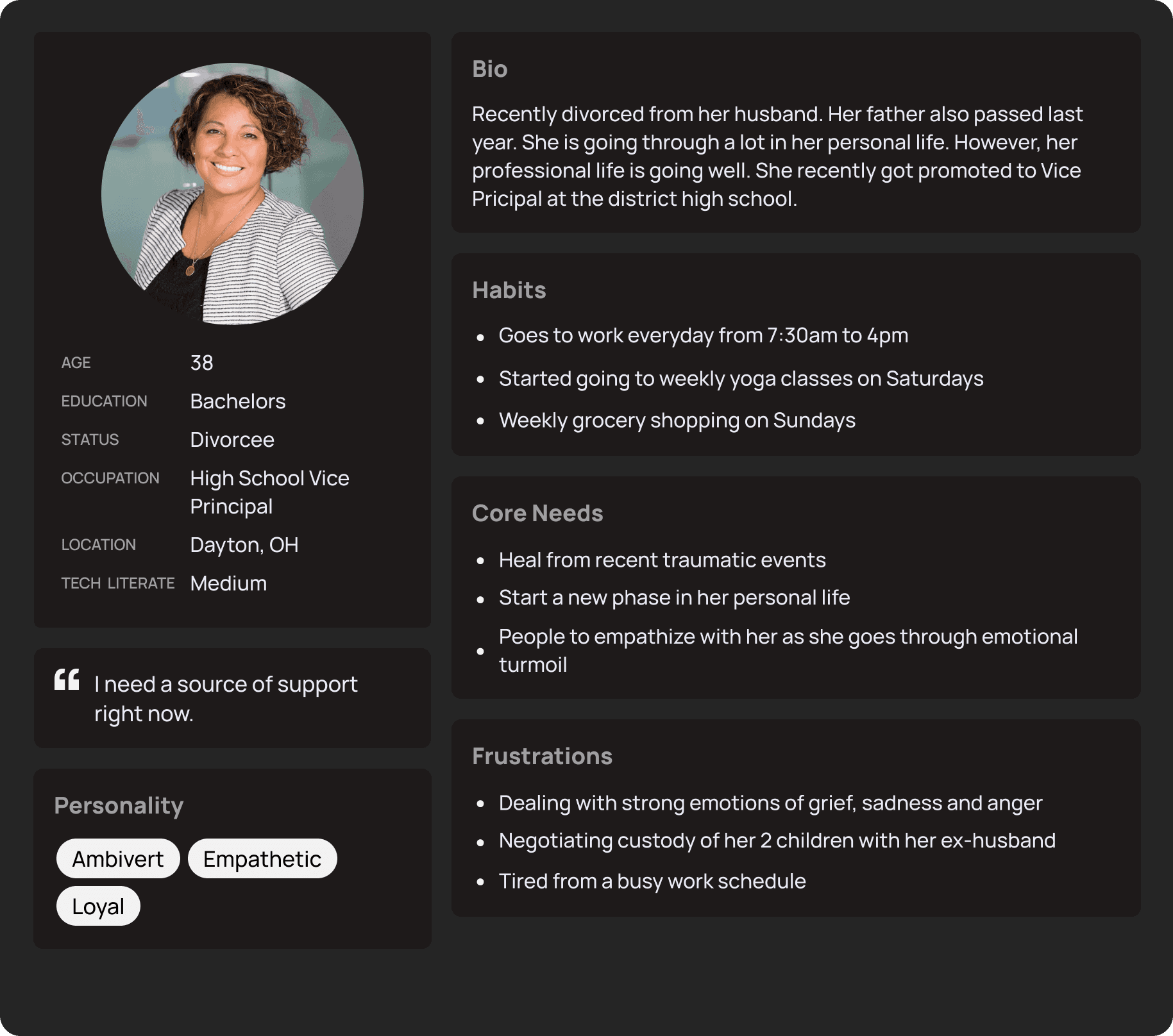
Personas
Rae has a diverse user base. I made 5 personas to empathize with why people use Rae, how they engage with it, features to expand upon, and areas for improvement. These helped direct redesigns of the product.
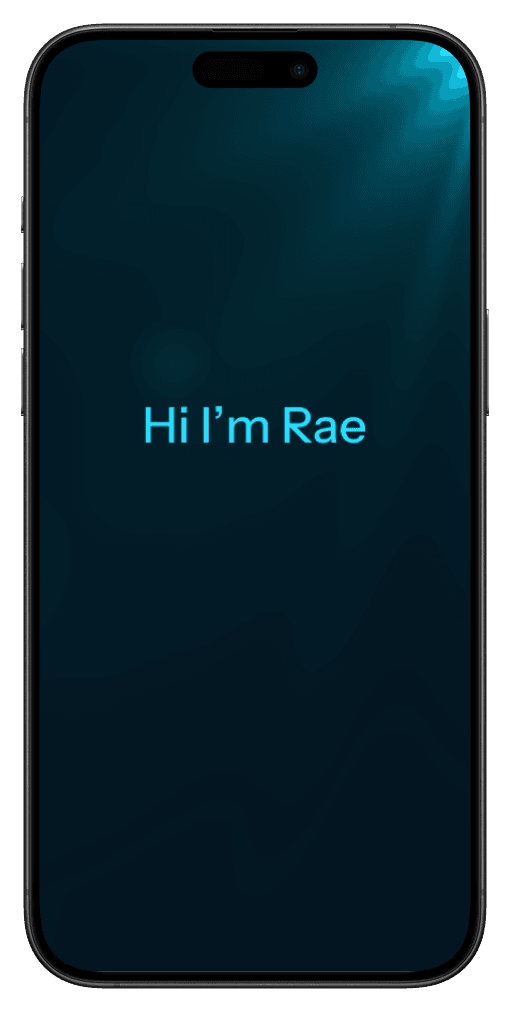
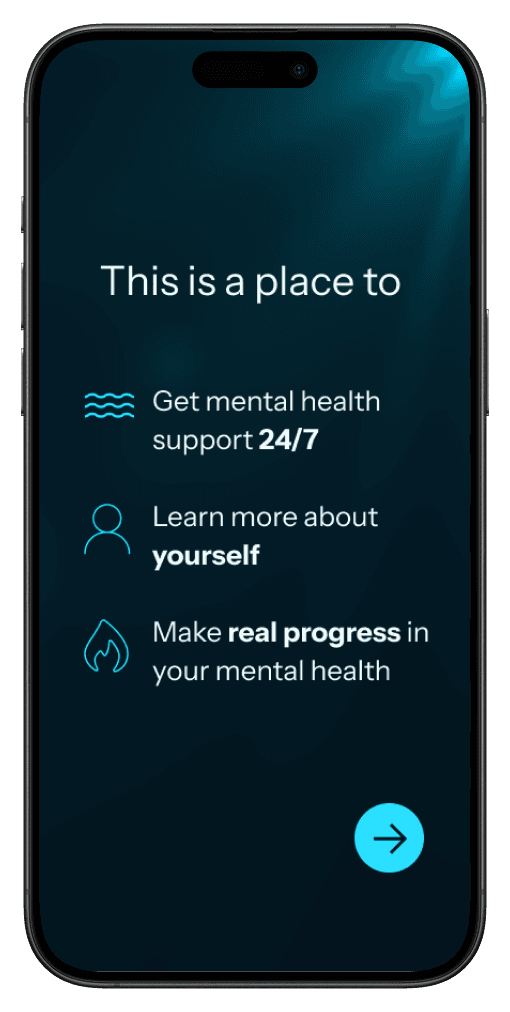
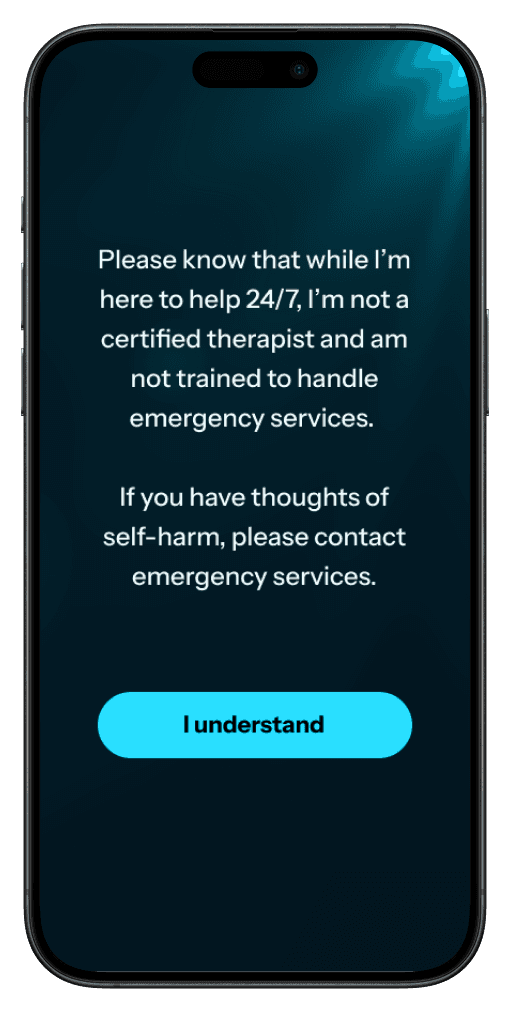
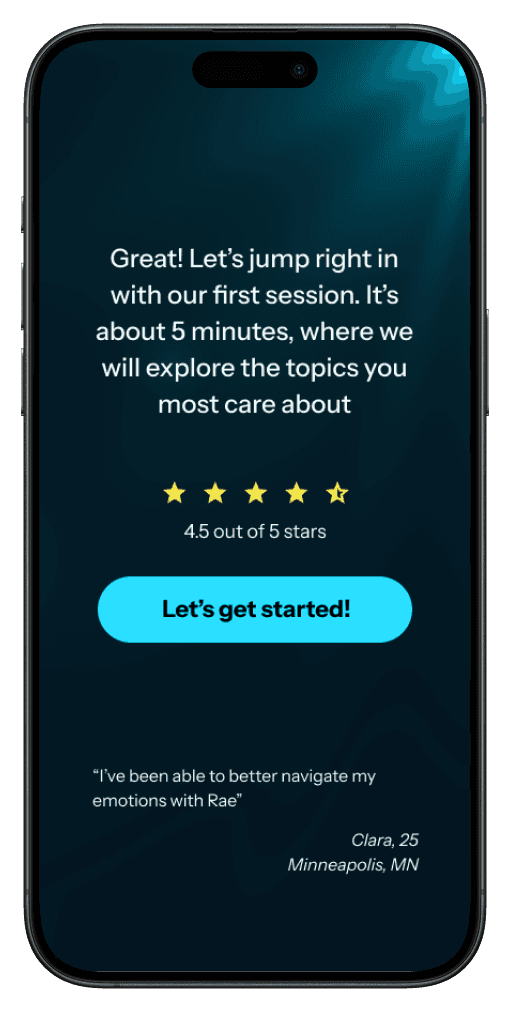
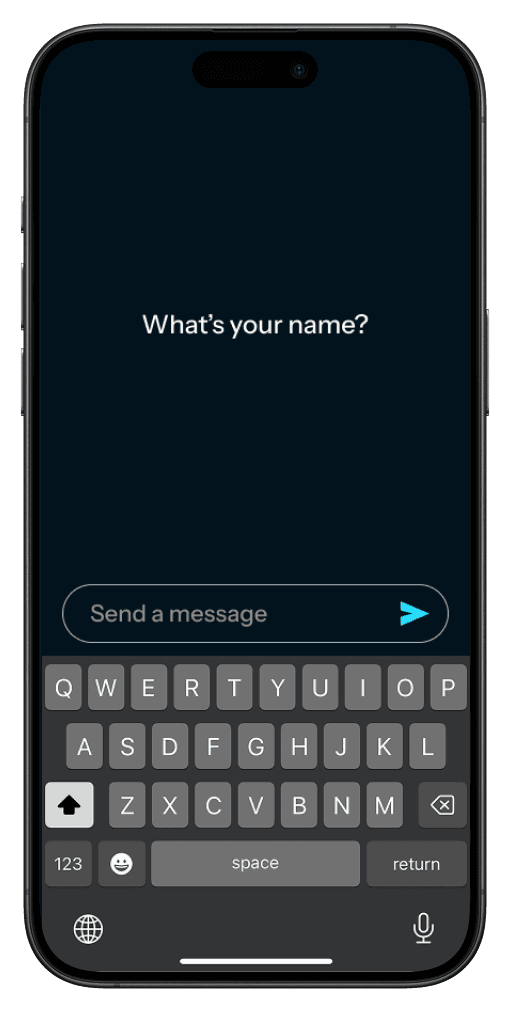
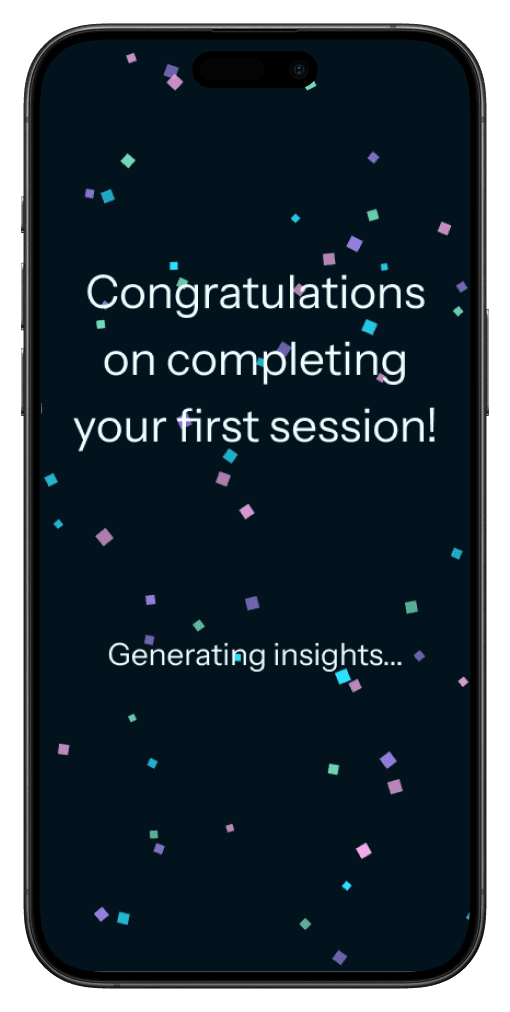
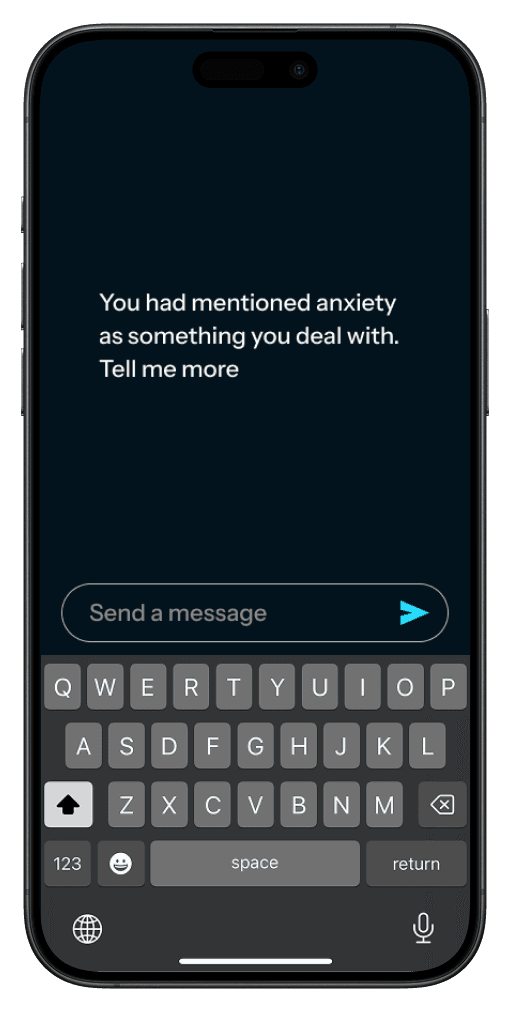
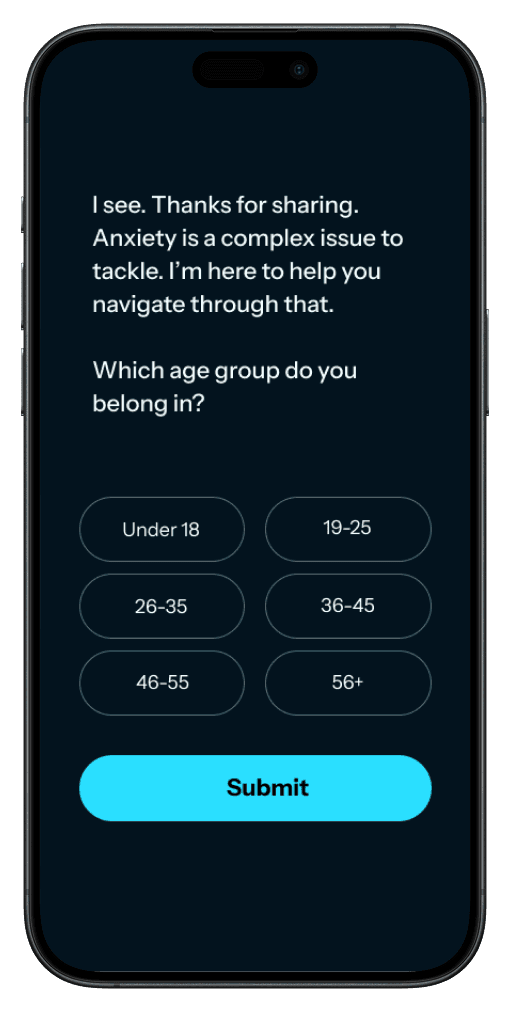
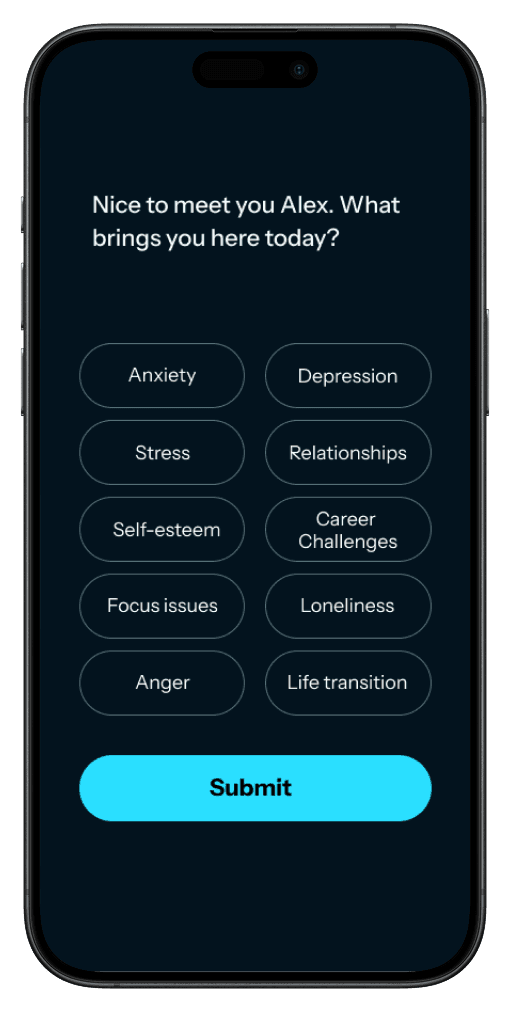
The first screens introduces users to Rae's calming & hopeful energy, value proposition and limitations
Then we gather important information about the user to personalize the experience, keeping questions to the most essential ones so users don't get frustrated and exit.
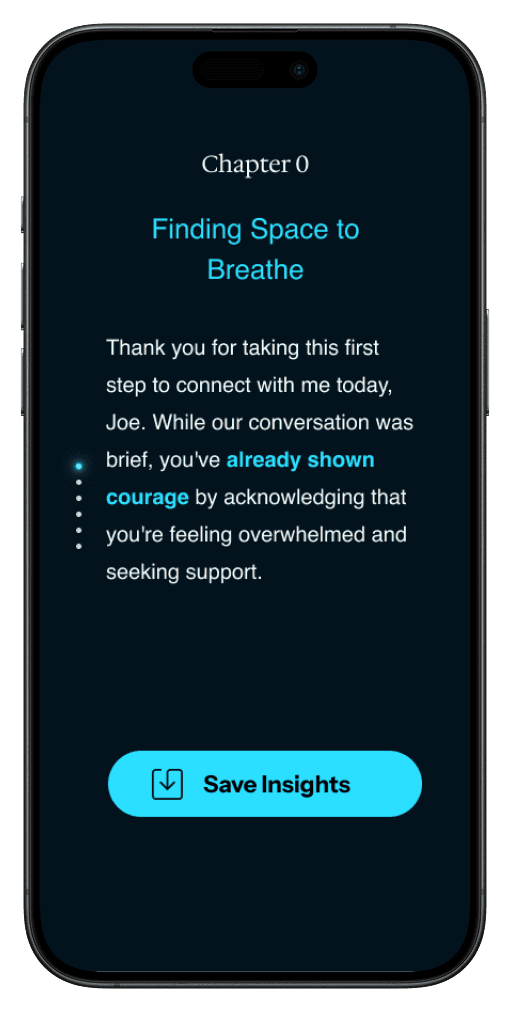
After gathering key information, we transition directly into the first therapy session to decrease friction. The user would get insights & next steps after chatting with Rae for a few minutes. This would be the first chapter in their journey with Rae.
Adding Voice
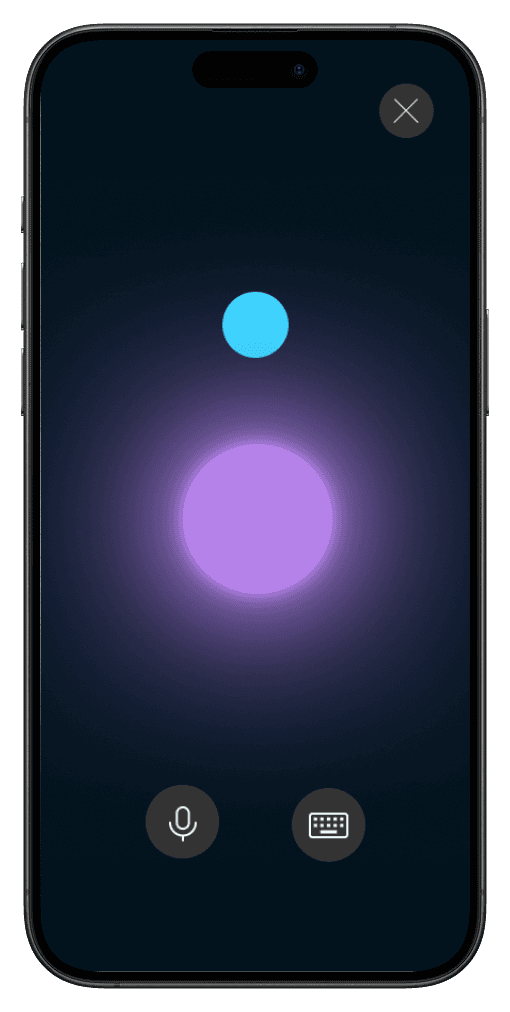
One key takeaway from surveys and user interviews is that a lot of people prefer to talk naturally rather than having to type. I tried different approaches to visually show when Rae is listening vs. talking, while keeping the overall feeling calm and natural. I also wanted to keep the experience immersive with minimal distractions to help users focus on the session.
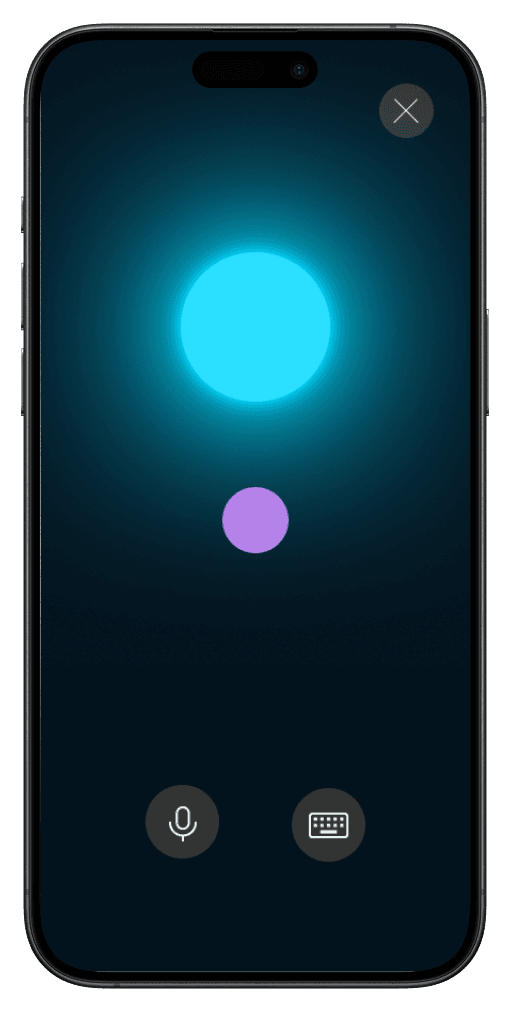
Rae is talking
User is talking
Expansion of Session Insights
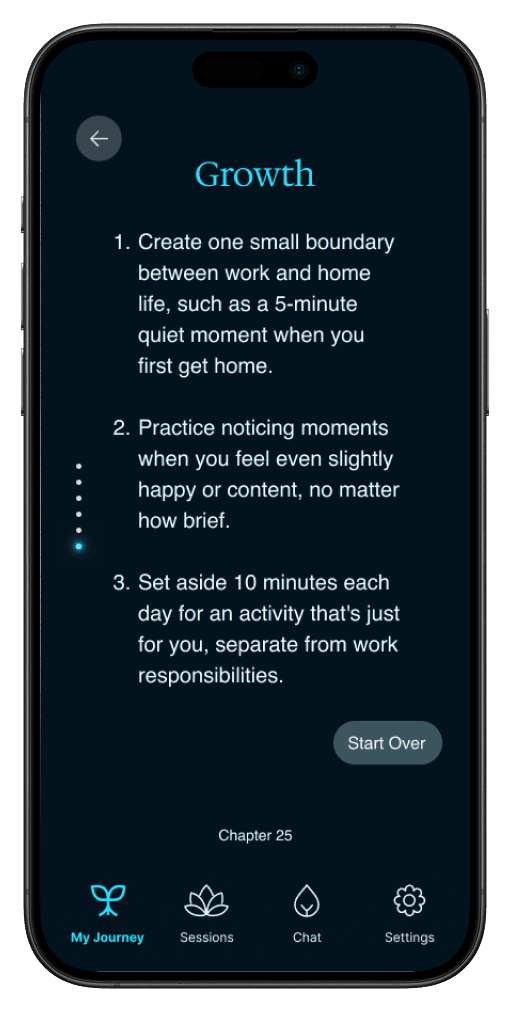
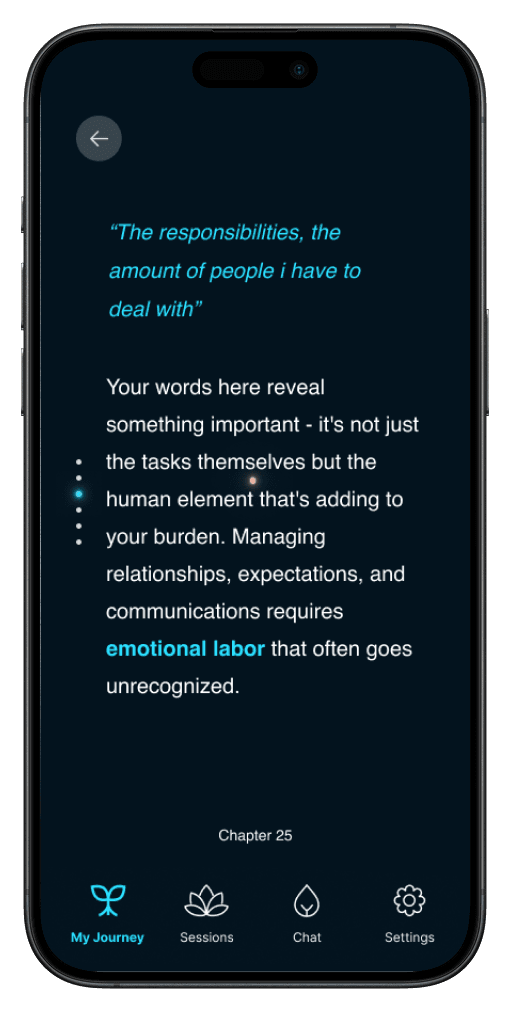
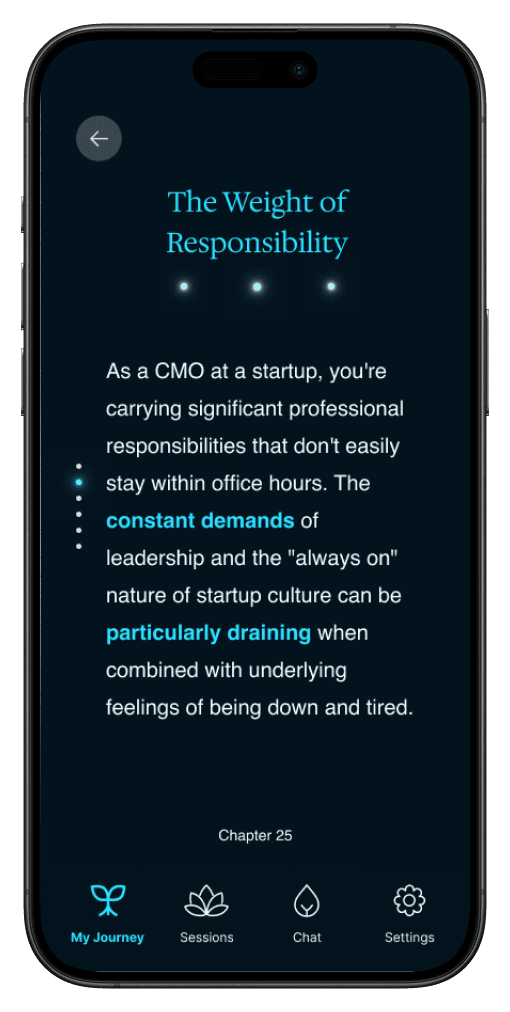
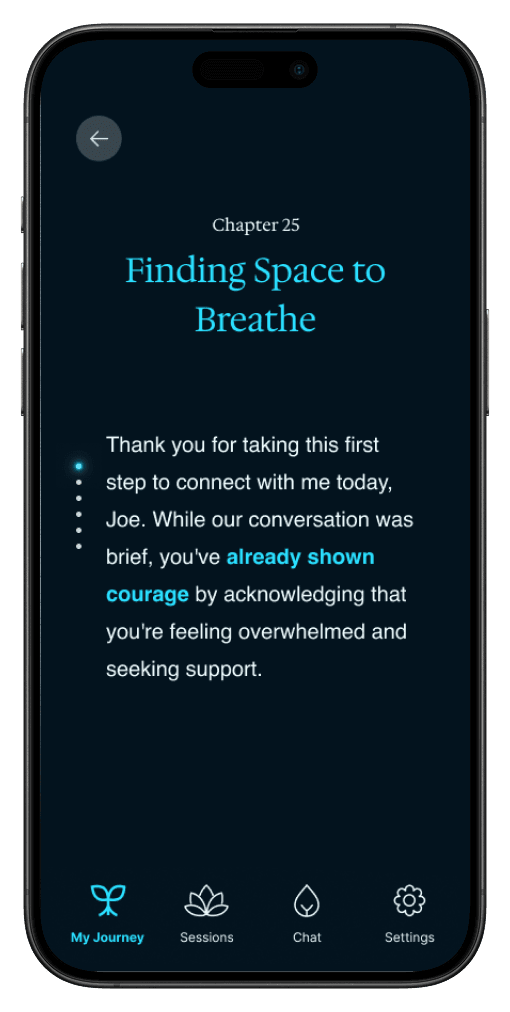
Another advantage of AI based therapy is the ability to generate insights and save them. Many users reflected that they got a lot of value from reading insights at the end of each session. I redesigned the insights section to be more robust and organized with actionable next steps to take. To make it more personal, key quotes are highlighted. To mark progress, each session is a chapter, as in a chapter in their mental health journey.
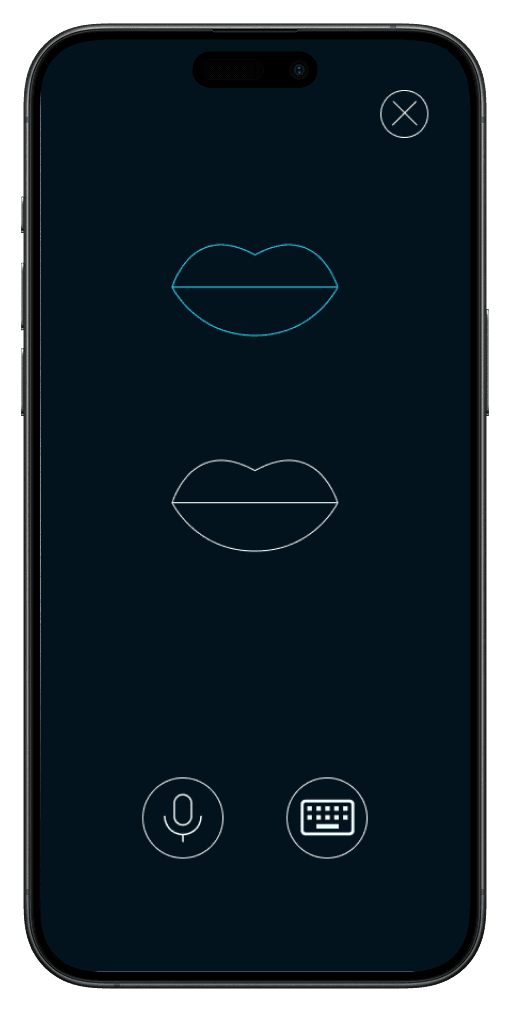
Trial, just for fun
Visualization of My Journey
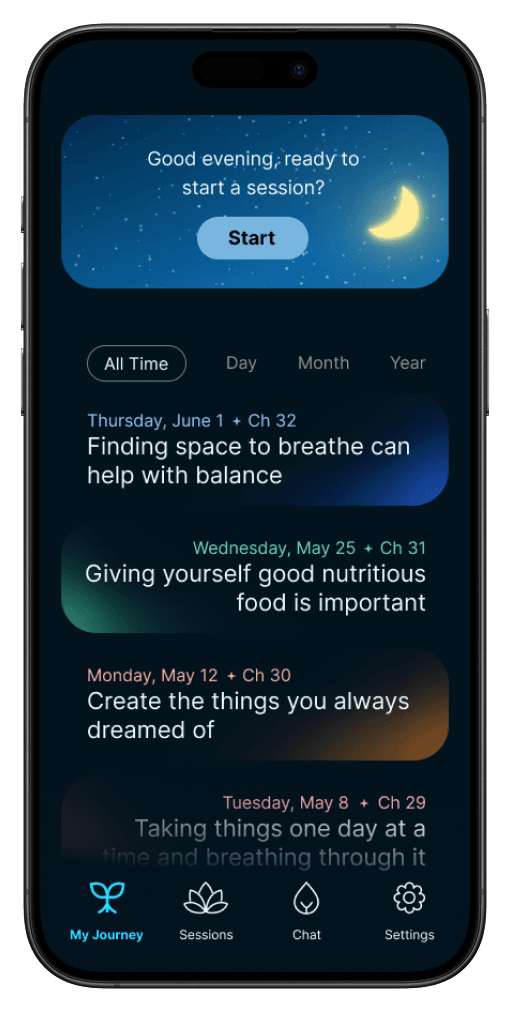
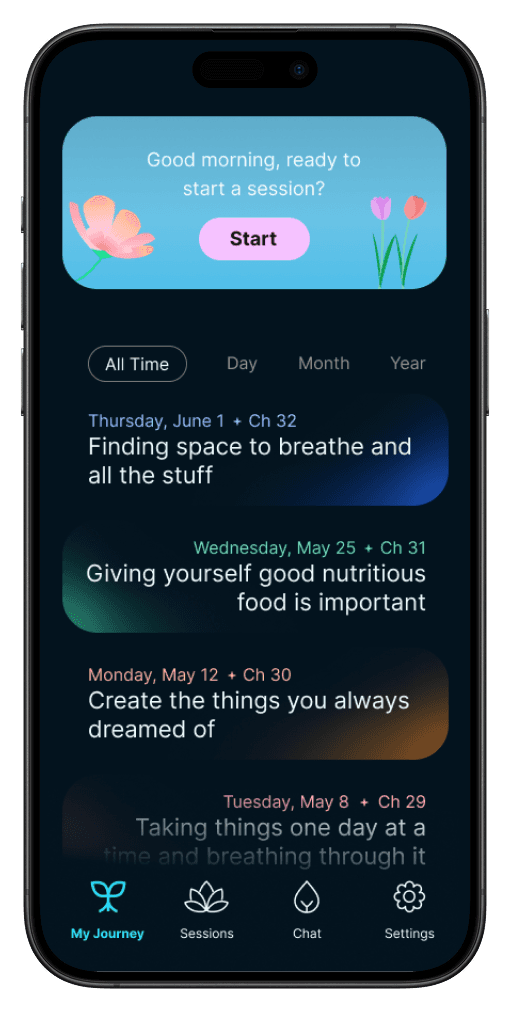
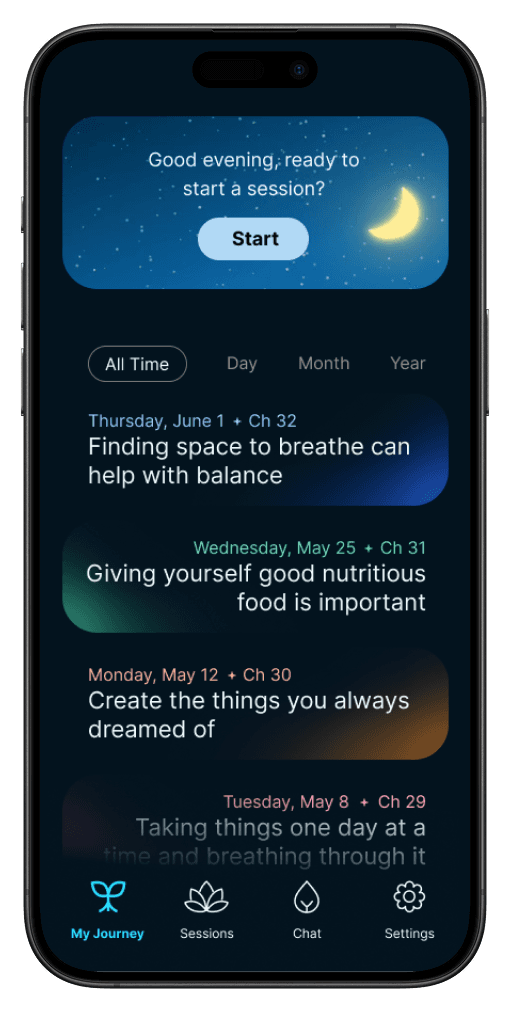
To build emotional connection and stickiness, we wanted to track the user's mental health journey and the topics they discuss with Rae. There is also a clear CTA to start a session. The banner changes colors depending on time of the day.
Immersive Sessions
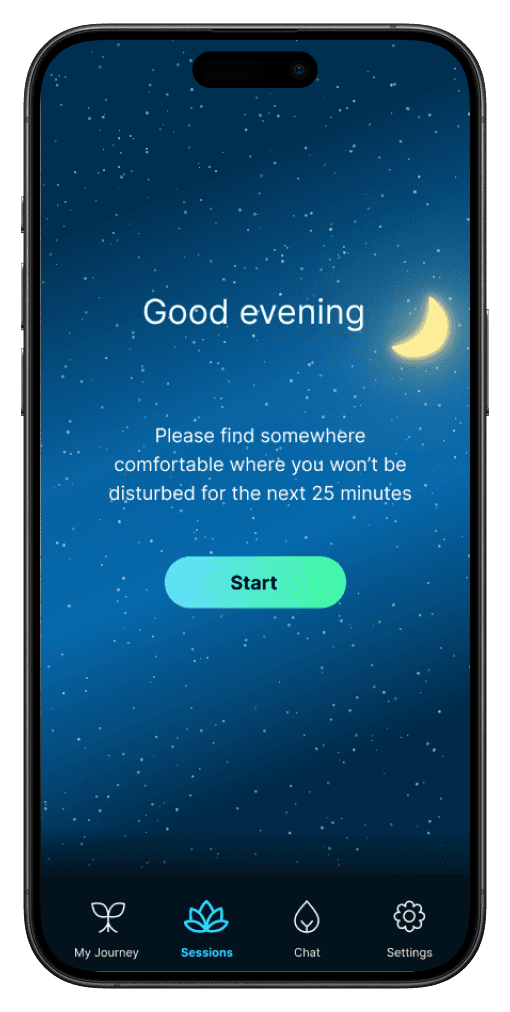
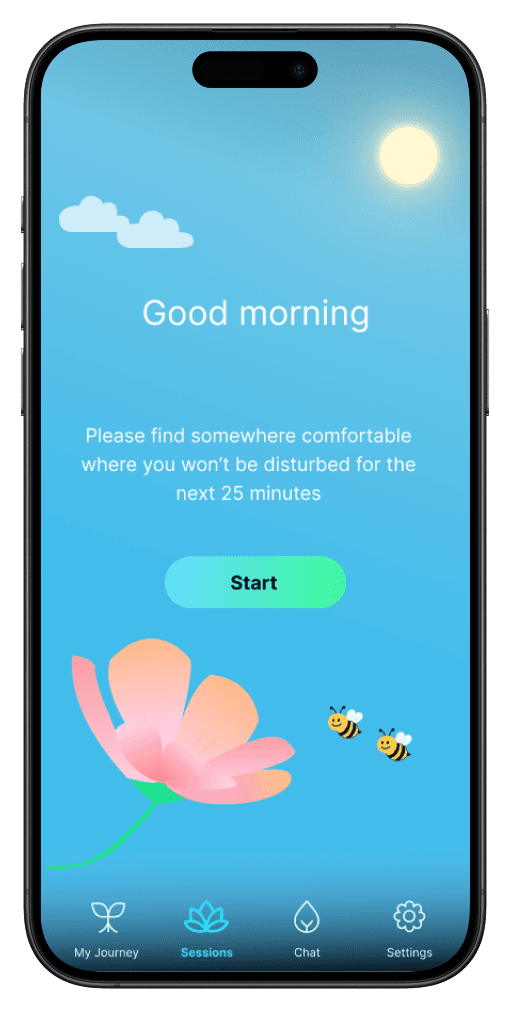
I designed the Start Session screen to be more immersive and engaging for users. The illustrations change depending on time of the day.
Differentiating 24/7 Chat from Formal Sessions
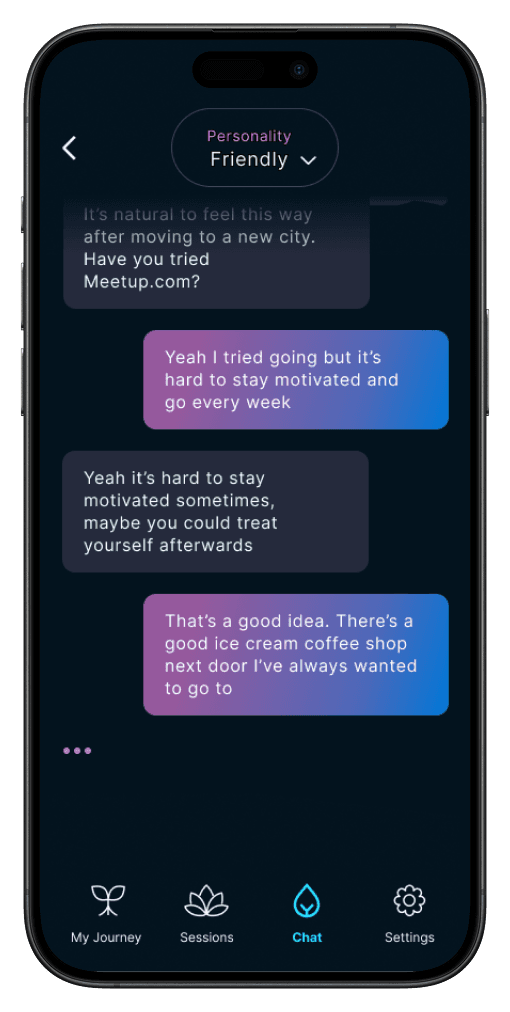
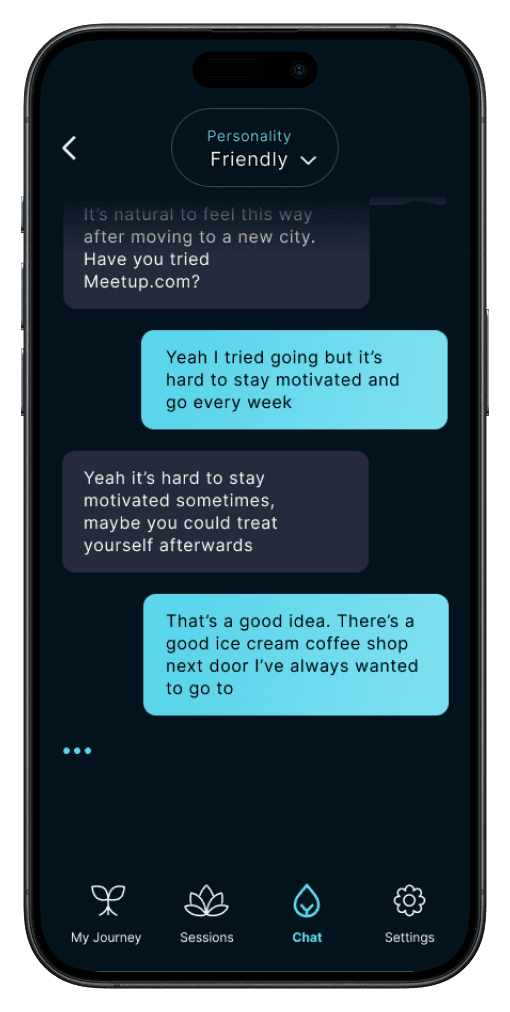
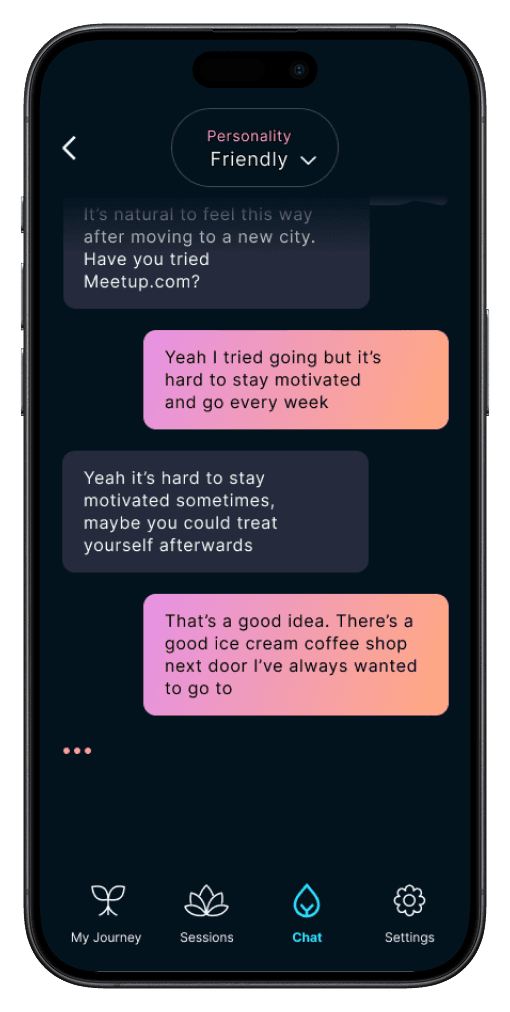
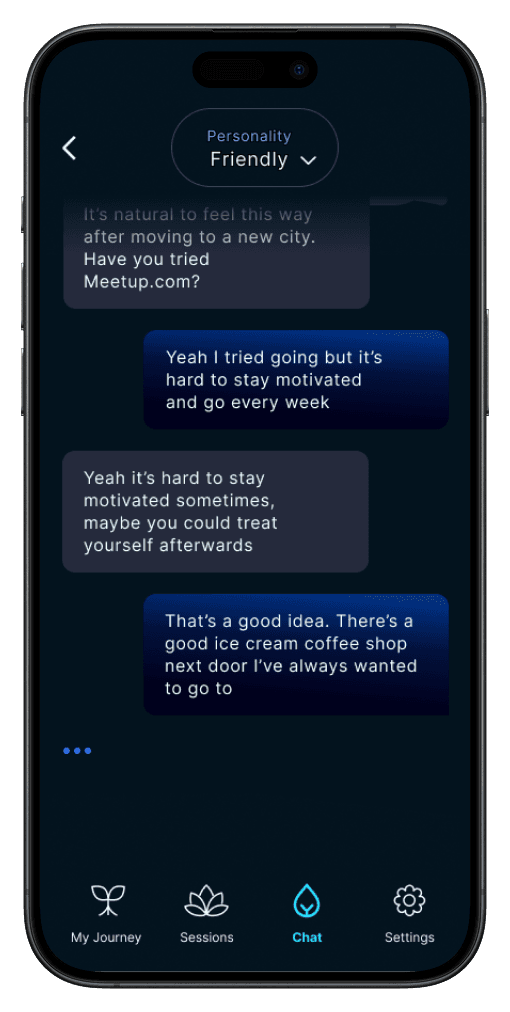
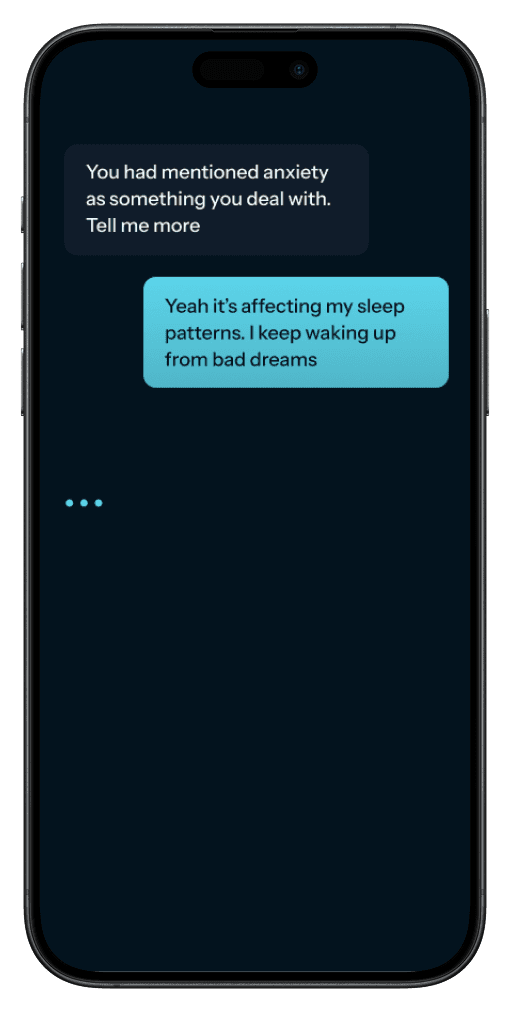
A big advantage of AI therapy is that it's available 24/7. We wanted to make this feature different from formal sessions. I made the UI more casual with the ability to customize colors.
Ability to Bookmark Insights
We noticed users taking screenshots on their phone during conversations with Rae. This made me think a user may connect strongly with certain insights and want to remember them for the future. We added the ability to save insights, calling it Bookmark to fit the overall theme of writing chapters in one's journey.
A bookmark icon appears next to the last 2 messages from Rae. Users can also double tap on any message to bookmark it.
This is the main page where all bookmarked items appear. Chats with Rae have a quote in front. Summary insights are underlined with blue dots.
If the user clicks on a quote, they would see a pop up of the conversation it was in. The user can go to the full conversation or close the pop up.
If the user clicks on a summary insight, they would see the full paragraph with the ability to go to that chapter or close the pop up.

Go Back


